Bearing Balls
Rolling elements sold on their own: ceramic, stainless and steel bearing balls in wide size and grade spans, for builds, servicing and assemblies.
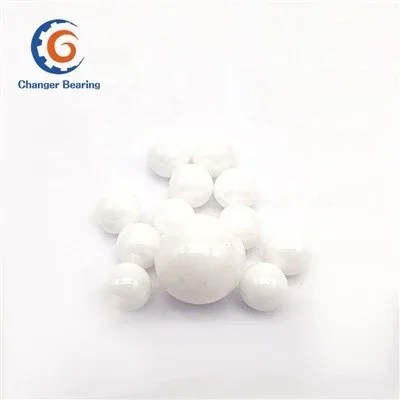
Bearing balls · ZrO2 1 to 12 mm · Si3N4 · SS304 · steel grades
Four materials, four reasons
Loose balls are bought by material first. Zirconia ZrO2 balls cover the ceramic duties — the line runs 1 to 12 mm — where corrosion, insulation or a ceramic assembly is the point. Silicon nitride Si3N4 balls come in grades G5 and G10 for the precision end. Stainless SS304 balls span 0.5 to 50.8 mm, the widest size run of the four. Bearing steel balls are the standard line, in grades from G10 to G1000. Each material line answers a different assembly, and the inquiry should name the material before the size.
| Ball material | Size or grade span |
|---|---|
| Zirconia ZrO2 | 1 to 12 mm |
| Silicon nitride Si3N4 | Grades G5 and G10 |
| Stainless SS304 | 0.5 to 50.8 mm |
| Bearing steel | Grades G10 to G1000 |
Balls for bearings, and balls as components
Two kinds of buyer order loose balls. The first services or builds bearings — replacement elements for the ceramic family and for assemblies the buyer manufactures — and orders by grade as much as by size, because the grade is the bearing's precision. The second buys balls as components in their own right: check and valve balls, detent and indexing balls, agitator and grinding-adjacent uses. The specification sentence is the same — material, diameter, grade, quantity — but the quantity logic differs, pieces for assemblies against weight or bulk counts for component use, and the inquiry should say which it is.
Grade is a specification, not a detail
Ball grade names the tolerances the ball is made to — sphericity, diameter variation, surface — and in a bearing it is not a cosmetic choice. The grade spans (G5 and G10 in silicon nitride, G10 to G1000 in steel) mean grade belongs in the order line wherever the application is a bearing. Where the ball is a component and grade is genuinely free, saying grade-free in the inquiry is also a specification, and a useful one: it lets the line be priced at the economical end of the span rather than at a guessed grade.
Specifying a ball order
State the material, the diameter and the grade for each line, with the quantity in the unit the order thinks in — pieces, or bulk by agreement. Diameters at the small end of the zirconia line and the stainless span are counted, not weighed, in most assemblies; if your count is by weight, say so. Mixed-material lists are normal here — a ceramic line and a steel line on one inquiry — and each line should carry its own material word so nothing is read across.
Related pages
Send an inquiry
Name the material, diameter and grade for each bearing ball line on your list, with quantities and the destination market, and send it through the inquiry form.