Ceramic, Hybrid Ceramic or Steel Bearings
Three constructions, one size system: steel bearings as the default, hybrids with ceramic balls, and full ceramic builds — sorted by the pressure that justifies each.
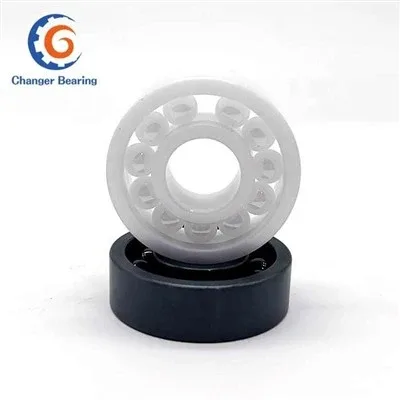
Comparison · steel · hybrid ceramic · full ceramic
The three constructions in one view
Every bearing in this comparison shares the deep groove size system, so the choice is purely about construction. A steel bearing runs steel rings and steel balls — chrome steel standard, stainless where corrosion starts. A hybrid ceramic bearing keeps steel or stainless rings and runs ceramic balls, taking the material change at the rolling contact only. A full ceramic bearing builds rings and balls from ceramic throughout. The two ceramic constructions stand on the ceramic family page; the decision between all three is priced here.
| Construction | Rings | Balls | Choose it when |
|---|---|---|---|
| Steel | Chrome steel or stainless | Steel | The duty is ordinary and cost leads |
| Hybrid ceramic | Steel or stainless steel | Ceramic | Speed, wear or insulation at the contact is the issue |
| Full ceramic | Ceramic | Ceramic | The rings face the same attack as the balls |
Where steel is the right answer
Most bearings should be steel. The steel family covers the general run of machinery with the widest series list, the full option frame and the lowest cost, and a ceramic construction buys nothing in a dry, cool, ordinary-speed position. Stainless steel extends the steel answer into wet duties — the stainless line in SS420, SS440, SS304 and SS316L — and it should be priced before ceramic is, because many corrosion problems are solved at the stainless step. Ceramic enters where steel's limits, not its price, are the problem.
Where hybrid ceramic earns its premium
The hybrid takes the ceramic advantage exactly where friction and wear happen: at the ball contact. High-speed positions, electrically sensitive positions where current tracking damages steel balls, and long-life positions where the contact is the wear site are the hybrid's home territory — electric motors and generators head the ceramic family's application list for this reason. The rings stay steel, so the housing fits, the cost step is one component deep, and the size system is unchanged. If the environment attacks the rings as well, the hybrid is a half-answer.
Where only full ceramic answers
The full ceramic build is for duties that reach every surface: chemical and corrosive environments, semiconductor and clean equipment, medical and laboratory positions, and non-magnetic or fully insulating requirements. There the rings corrode, conduct or magnetise exactly as steel balls would, so the whole bearing changes material. The example line — full ceramic in the 6000, 6002 and 6003 sizes — shows the pattern: standard dimensions, ceramic throughout.
Sorting your own list
Work down the list by pressure, not by preference. Ordinary duty: steel. Wet duty: stainless steel. Speed, wear or electrical tracking at the contact: hybrid. Chemistry, cleanliness or insulation at every surface: full ceramic. Name the pressure in the inquiry alongside the construction — a line that reads hybrid ceramic with the reason attached is a line nobody re-opens — and keep the constructions as separate items even at the same size, because a 6003 in steel and a 6003 in full ceramic are different deliveries.
Send an inquiry
Name the construction and the pressure behind it for each bearing on your list, with quantities and the destination market, and send it through the inquiry form.