Full Ceramic Bearings
Bearings built entirely from ceramic: ceramic rings and ceramic balls together, with the example line running through the 6000, 6002 and 6003 sizes.
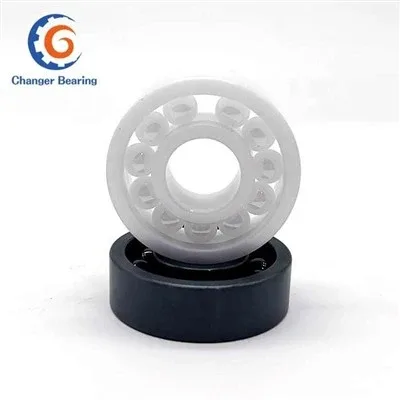
Full ceramic bearings · ceramic rings and balls · 6000 sizes
Ceramic at every working surface
A full ceramic bearing extends the ceramic beyond the balls: the inner and outer rings are ceramic as well, so no working surface in the bearing is steel. That is the construction to specify when the whole bearing must resist the environment — chemical exposure that attacks rings as well as balls, electrical insulation that a steel ring would bridge, or a non-magnetic requirement a hybrid cannot meet. The full and hybrid constructions sit side by side on the ceramic family page; the all-ceramic branch is the subject here.
| Build point | For the full ceramic line |
|---|---|
| Rings | Ceramic |
| Rolling elements | Ceramic balls |
| Cages | Steel, polymer or ceramic |
| Ceramic materials | Si3N4 silicon nitride and ZrO2 zirconia |
| Precision frame | P0, P6, P5 and P4 |
| Sizes | Metric, inch and customised |
The example line
The family's example product is a full ceramic line in the 6000, 6002 and 6003 sizes — standard deep groove dimensions carried into ceramic, which is the pattern for the whole construction: a full ceramic item is usually a standard size re-specified in ceramic, not a new geometry. That makes conversion inquiries straightforward. Give the steel or hybrid code the position currently runs, name the full ceramic construction and the ceramic material, and the size carries across while the material logic changes underneath it.
Full ceramic or hybrid: the deciding points
The full three-way choice is worked on the comparison page, but the short form is this: hybrid ceramic answers where the rolling contact is the problem — speed, wear, electrical tracking across the contact — and full ceramic answers where the rings face the same attack as the balls. Chemical and corrosive environments, semiconductor and clean equipment, and medical and laboratory equipment headline the family's application list, and they headline it precisely because in those duties the rings are as exposed as the rolling elements.
Specifying a full ceramic item
State the size or the code it converts from, the ceramic material — Si3N4 or ZrO2 — and the cage material where the duty fixes it, polymer cages being the usual clean-duty choice. Ceramic is brittle in a way steel is not, so the handling and seating notes matter more here than anywhere else in the range: if the bearing seats into a housing that has taken steel bearings before, say so, and the fit conversation happens before the order rather than after the first fitting.
Full ceramic bearings are also specified where the bearing itself must not carry a magnetic signature or a conductive path, duties steel cannot serve at any grade. If either property is the reason for the order, name it in the inquiry: it decides the cage and ball material combination the item is built around.
Send an inquiry
Give the size and ceramic material for each full ceramic item on your list, with quantities and the destination market, and send it through the inquiry form.