Pillow Block or Flange Unit
The mounted range's standing choice: a pillow block that bolts down to a base, or a flange unit that bolts flat to a frame — compared point by point.
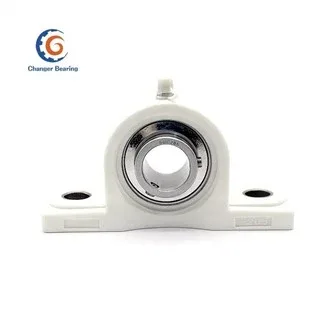
Comparison · UCP pillow blocks · UCF flange units · mounting
The mounting surface decides first
Start where the unit bolts. A pillow block mounts on a horizontal base and stands the shaft above it on a foot — the standard conveyor, fan and line-shaft arrangement. A flange unit mounts flat against a vertical frame, wall or machine end, with the shaft passing through or ending at the surface. Most machines answer the question themselves: the surface exists before the bearing is chosen, and the unit follows it. The secondary points — height, space, pattern and material — decide the positions where both surfaces genuinely exist.
| Point | Pillow block (UCP) | Flange unit (UCF, UCFL, UCFB) |
|---|---|---|
| Mounting surface | Horizontal base or sole plate | Vertical frame, wall or machine end |
| Shaft position | Raised above the base on a foot | Set by the frame face |
| Fixings | Two foot bolts | Four, two or three flange bolts by type |
| Typical ground | Conveyors, fans, line shafts | End frames, walls, enclosed drives |
Shaft height and centre line
A pillow block fixes the shaft centre above its base by the housing's own dimension, so a run of pillow blocks along one base shares one centre line when the codes match. A flange unit sets the centre from the frame face and the unit's own geometry, which suits ends of machines and through-wall shafts. Mixing the two on one shaft run is common and workable — pillow blocks along the run, a flange unit where the shaft meets the drive frame — but the centre lines have to be set out on the drawing, because neither form adjusts to the other by itself.
Space and bolt patterns
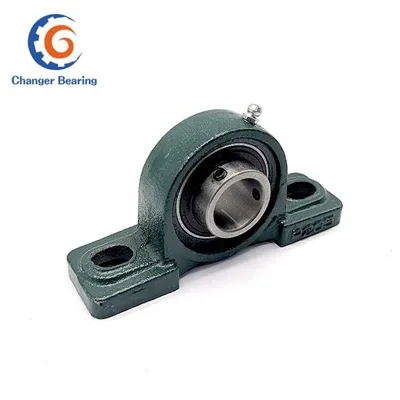
The flange family subdivides by the room the frame offers: the UCF square four-bolt where the frame takes it, the UCFL oval two-bolt where it does not, the UCFB three-bolt between them. The pillow block's footprint is its foot, and its constraint is base width rather than pattern. The patterns stand in full with the flange units, and the UCP line, including its UCP206 example, with the pillow blocks. On a tight frame, measure the pattern before choosing the code — the insert is the same, the casting is not.
Materials follow the duty, not the shape
Both forms run in the mounted range's three housing materials, so shape and material are independent choices. Cast iron is the standard for dry lines in either shape. The stainless line offers SUCP, SUCF and SUCT for washdown in all three shapes. The thermoplastic lines, including the one-inch plastic set, cover washdown at lighter duty. A food line might therefore order stainless pillow blocks along the wet run and stainless flange units on its frames — one material decision, two shape decisions, four lines on the inquiry.
Writing a mixed mounted order
List mounted units by position, not by code totals: position, shape, code, shaft size, material, quantity. A totals list — so many UCP, so many UCF — hides which positions are stainless and which are cast iron, and that is the error this family produces most. Where one machine takes both shapes at one shaft size, say the machine set is a set; the units travel together and the position list is what the machine will be assembled from.
Send an inquiry
List your mounted units by position with shape, code, shaft size and material for each, plus quantities and the destination market, through the inquiry form.