PEEK Bearings
The top of the plastic range: sealed PEEK bearings with ceramic balls, high-temperature PEEK lines and a custom single-flange double bearing in PEEK.
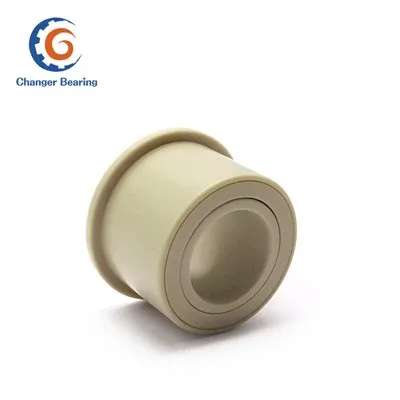
PEEK bearings · ceramic rolling elements · sealed and high-temperature lines
PEEK at the top of the plastic range
PEEK is the plastic this range reaches for when the duty outruns the standard engineering plastics: heat, aggressive chemistry and mechanical load arriving together. The PEEK lines make the shape of the offer clear — sealed PEEK bearings with ceramic balls, high-temperature PEEK bearings, and a custom PEEK single-flange double bearing with ceramic rolling elements. Inside the plastic family, PEEK is where a specification lands when POM's water-duty economics no longer answer the environment.
| PEEK line | Form |
|---|---|
| Sealed PEEK bearing | Sealed construction with ceramic balls |
| High-temperature PEEK | PEEK line for hot duties |
| Custom PEEK flange bearing | Single-flange double bearing, ceramic elements |
Ceramic elements inside a plastic race
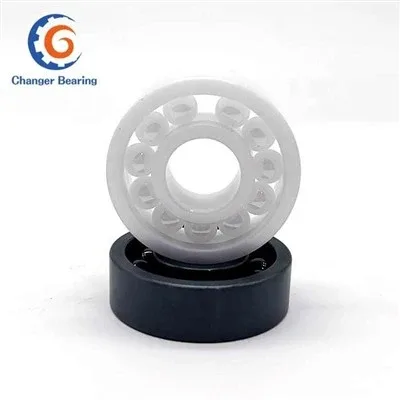
The recurring construction in this line pairs PEEK races with ceramic rolling elements, and the pairing is the specification: the plastic answers corrosion and chemistry at the rings, the ceramic answers wear, temperature and insulation at the contact, and neither material brings metal into the assembly. That is also where the line meets the full ceramic range — a buyer whose duty defeats PEEK's load or temperature ceiling moves up to full ceramic; a buyer whose duty is chemical and wet but mechanically modest moves down to POM.
The custom flange type
The custom PEEK single-flange double bearing deserves its own note because it shows what custom means in the plastic range: a flanged, doubled bearing form produced as a specific part, not a standard size. Plastic custom work follows the custom bearing frame — dimension set, material, sealing, duty — with the plastic named first. A drawing for a plastic part should also state the environment in words, since in plastics the environment is a material property input, not background.
Specifying a PEEK bearing
State the size or the code the position currently runs, the PEEK line (sealed, high-temperature or custom flange), and the environment: temperature in words, chemistry in words, wet or dry. Quantities for PEEK lines are usually programme quantities rather than samples, and if samples come first, say so — the sample and programme lines are the same specification at different counts, and keeping them on one inquiry keeps them the same specification.
PEEK is the line where a sample settles arguments that dimensions cannot: the polymer family covers grades with different fillers, and two bearings of identical size can behave differently in the same duty. Where the application is new, ask for the item to be specified against the duty in writing before the run; where it repeats a previous order, the standing item list carries the grade already agreed, and only the quantities need confirming.
Buyers consolidating several plastic duties onto one supplier usually sort them by temperature first and chemistry second. Send the list in that order, hottest duty first, and each line is answered against the plastic that serves it, rather than the whole list being priced as PEEK by default.
Send an inquiry
Give the size, PEEK line and environment for each PEEK bearing on your list, with quantities and the destination market, and send it through the inquiry form.