Stainless Steel Bearing Grades, Side by Side
Four stainless grades carry the stainless bearing line — SS420, SS440, SS304 and SS316L — and they divide into two families with opposite strengths.
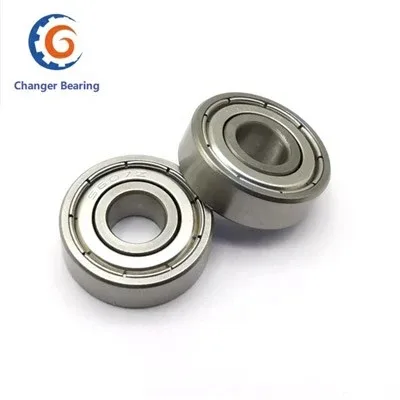
Two families inside the stainless set
The four grades of the stainless bearing line are not four steps on one ladder; they are two pairs built on different metallurgy. SS420 and SS440 are the hardenable stainless grades — the bearing steels of the set, heat-treated for hardness and load, with corrosion resistance that is real but modest. SS304 and SS316L are the austenitic grades — the corrosion steels of the set, resistant far beyond the first pair, but softer, and not hardenable the way a bearing steel is. Every grade choice in this line is a position taken on that trade: hardness and load against corrosion resistance.
SS420 and SS440: the bearing steels
SS420 is the entry grade of the hardenable pair: a stainless that still behaves like a bearing steel, taking a working hardness and a normal bearing life, while shrugging off the mild moisture that rusts chrome steel — damp plants, condensation, occasional splash. SS440 steps the same idea up: more carbon, more hardness, the grade for stainless positions that still carry real load and speed. Most stainless bearing orders live in this pair, because most wet duties are damp rather than chemical, and a bearing that gives up too much hardness to buy corrosion resistance it never uses has traded the wrong way.
SS304 and SS316L: the corrosion steels
SS304 is the general corrosion grade: food-adjacent equipment, water handling, outdoor machinery and chemical splash all sit in its territory, and it is the default austenitic choice where the hardenable pair would stain or pit. SS316L extends the same family with molybdenum in the alloy and a low-carbon weld-friendly form, which is the marine and chlorinated step — salt water, chlorinated washdown, coastal plants. The price of the pair is hardness: these are softer steels, and a specification that needs both full bearing load and full corrosion resistance is asking the trade to disappear, which it does not.
| Grade | Family | Strength in the trade | Typical territory |
|---|---|---|---|
| SS420 | Hardenable | Hardness with mild corrosion resistance | Damp plants, condensation, splash |
| SS440 | Hardenable | More hardness and load in stainless | Loaded stainless positions |
| SS304 | Austenitic | Broad corrosion resistance | Food-adjacent, water, outdoor |
| SS316L | Austenitic | Chloride and marine resistance | Salt water, chlorinated washdown |
Choosing by the water, not by the word stainless
The working question is what water, how often, carrying what chemistry. Condensation and damp air: SS420 usually answers, and keeps the bearing's hardness. Regular wetting and food-area washdown without chlorides: SS304 is the honest grade. Chlorinated or salt exposure: SS316L, accepting the softer bearing as the cost of the environment. Continuous load at speed in merely damp air pulls the other way, back to SS440. Notice that plain chrome steel still exists below this whole table — a dry position in a stainless costume is money spent on the wrong line, and the main steel family remains the dry answer.
Grades across housings and units
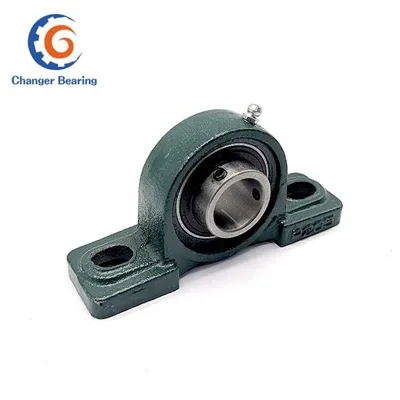
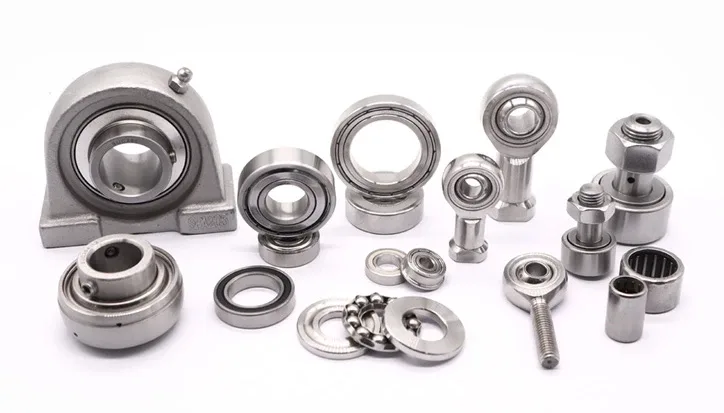
The grade decision repeats at the unit level. The stainless mounted units put stainless housings around stainless inserts for the same duties, and a line that specifies austenitic loose bearings in a washdown will usually specify stainless units on the same machine's mounted positions. Keep the logic consistent across the order: if the environment justified SS316L at the loose bearings, a merely coated housing at the mounted positions is the weak surface the washdown will find.
Grades in the washdown room and the food line
Washdown duty is where grade discipline pays for itself most visibly. A food or beverage line is hosed down on a schedule, and the bearings that survive are the ones whose grade was chosen for that schedule rather than for the price line. SS316L earns its premium in those rooms because the washdown chemistry is exactly the chloride exposure the molybdenum addition answers; SS304 in the same room is the grade that pits first and sheds debris into a place debris must never be. The buyer's specification usually already knows this — what fails is the transmission of the grade from the specification to the purchase order to the supplier, three hand-offs at each of which “stainless” can silently replace the grade.
The same logic runs in reverse at the dry end of the plant. Packaging machinery, conveyors in dry goods, and instrument positions see no chemistry worth the name, and there the premium grades buy nothing. Specifying SS316L across a whole plant because one room needs it is the symmetrical error to specifying “stainless” across the plant because most rooms are dry. Grades are per-position decisions, and the item list is where per-position decisions live.
- Washdown and chemical rooms: the grade stated by the end specification, in words
- Dry positions: standard grades, with the saving taken deliberately
- Mixed lists: one grade per line, never a blanket grade in the header
- Reorders: the grade on the standing list, checked against any change of duty
There is a record-keeping habit that holds all of this together: keep the grade decision with the machine, not with the order. A note in the machine file — this position runs SS316L because the room is washed down with chlorinated solution — outlives the buyer who made the decision and the supplier who filled it. Orders get copied forward for years; a grade recorded with its reason gets copied forward with the reason attached, and the next buyer inherits the engineering instead of just the code.
The habit extends to samples and failures alike: a pitted bearing kept in a bag with its position and grade written on it is evidence the next specification can use, worth more than a paragraph of recollection.
Reading the grade on a bearing you already hold
Replacements start from a bearing already in the machine, and its grade is not always written where a buyer can read it. Stainless codes in this range carry the material family in their own marks — the S prefix on an item such as S607ZZ names a stainless bearing — but the grade behind the prefix lives in the original order record rather than on the part itself. Where that record is lost, the duty decides the reorder: argue from the environment the position actually serves, choose the grade that answers it, and write the grade onto the new order in words, so the next replacement starts from a record instead of from a guess.
Writing the grade into the order
Stainless without a grade is an unfinished specification — the four grades price and perform differently, and a line that just says stainless will be priced at the economical end and may run at the wrong end. Name the grade per item. Where items divide — austenitic at the wet end of a line, hardenable at the dry loaded end — list them separately with their grades attached, and note the environment in a line per group. That note is what lets the next order repeat this one without re-arguing the metallurgy.
Send an inquiry
Write the grade next to each stainless item on your list, with the environment it answers, quantities and the destination market, through the inquiry form.