Thrust Ball Bearings
Single-direction thrust ball bearings in the 51100, 51200, 51300 and 51400 series: two washers and a ball cage, taking axial load in one direction.
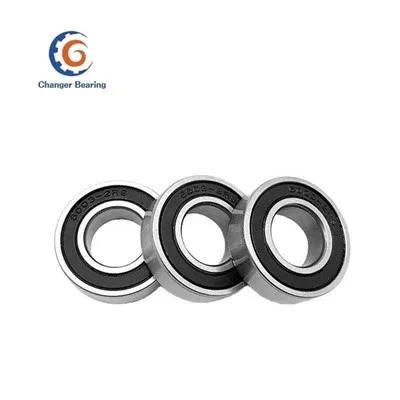
Thrust ball bearings · 51100 / 51200 / 51300 / 51400 series
Axial load, one direction
A thrust ball bearing does one job: it carries axial load — load along the shaft — in a single direction, and it carries essentially no radial load at all. The construction follows the job: a shaft washer, a housing washer and a ball-and-cage assembly between them, so the bearing is flat, separable and easy to seat. The range runs in four series, 51100, 51200, 51300 and 51400, which step the outside diameter and section up against the same bore steps, letting the designer trade envelope against load capacity inside one code system.
| Series | Position in the range |
|---|---|
| 51100 series | The slimmest section of the thrust range |
| 51200 series | The standard section of the thrust range |
| 51300 series | A heavier section for larger thrust |
| 51400 series | The heaviest section of the four series |
Thrust bearings beside the rest of the steel family
Thrust bearings are specified against two neighbours. A deep groove bearing from the main steel family carries radial load and a modest amount of axial load in both directions, and it is the right answer when thrust is incidental. An angular contact bearing carries radial and axial together at speed, in P4 grade. The thrust ball bearing is the answer when the axial load is the design load and it arrives in one direction — a vertical shaft, a screw jack, a clutch or a turntable seat.
Seating and specification points
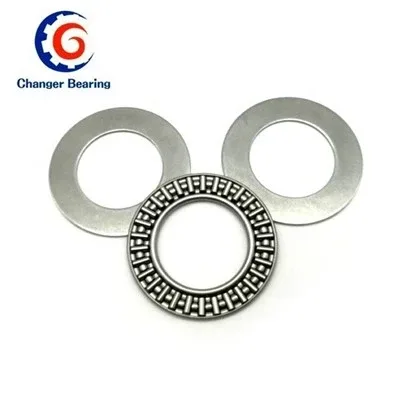
Because the washers are separate, a thrust bearing order should be read as a set: shaft washer, housing washer and cage assembly in the stated series and bore. The specification points are the bore, the series (which fixes the section), and the direction and character of the thrust — steady, intermittent or reversing. A reversing thrust is two bearings or a different construction, and saying so in the inquiry saves a mis-specified set: the thrust needle line is the flat roller alternative where the envelope is tighter than the ball washer set allows.
What a thrust inquiry carries
State the bore and the series for each item, the quantity in sets, and the thrust case in your own words — what pushes, in which direction, and whether it ever reverses. If the thrust bearing replaces an existing set, the old code converts directly, since the 51100 to 51400 numbering carries across directly. Housings and shafts are the buyer's machining; the bearing set is the supply.
Thrust bearings are also the line where the housing side gets forgotten: the washer faces and the seat they run against decide whether the set's axial capacity is reached. Note the seat arrangement in the inquiry when it is fixed, so the washer form supplied matches the seat it will actually run on.
Related pages
Send an inquiry
Give the series and bore for each thrust set on your list, with the thrust case and quantities in sets, plus the destination market, through the inquiry form.