Thin-Section Bearings
The 6800 and 6900 thin-section series: bearings whose cross-section stays slim while the bore grows, saving weight and envelope in large, light assemblies.
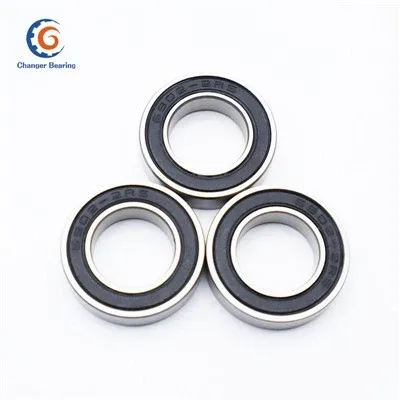
Thin-section bearings · 6800 and 6900 series · slim sections
A section that stays slim as the bore grows
In the standard series, a bigger bore brings a proportionally bigger section. Thin-section bearings break that link: across the 6800 and 6900 series the ring section stays slim while the bore steps up, so a large-diameter rotating assembly — a turntable, a light robotic joint, an instrument ring, a packaging machine dial — gains a bearing without gaining the weight and radial height of a standard bearing at that bore. That is the whole point of the two series, and it is why they stand as their own line inside the steel family.
| Series | Models | Section character |
|---|---|---|
| 6800 series | 6800 to 6805 | The slimmer of the two thin-section lines |
| 6900 series | 6900 to 6905 | A slightly fuller section at the same idea |
Where thin-section bearings are specified
The positions that specify thin-section bearings share a shape: large bore, modest load, and a design that counts grams or millimetres. Rotary tables and indexers, light automation arms, medical and laboratory rotating equipment, and large thin housings in general machinery all reach for the 6800 or 6900 series before the standard series. Where the load grows teeth, the answer moves back to the 6200 series and its fuller section — thin-section is a space decision, not a load decision.
Handling and housing points
A thin ring is a flexible ring until it is seated, so housing roundness and fit do more work in a thin-section specification than in a standard one. The inquiry should carry the housing material and the fit intention where they are known, and the closure choice — open, ZZ or 2RS inside the family frame — matters because a large thin bearing is often specified sealed to keep a big, slow assembly clean. Stainless thin-section items are handled through the stainless line where the duty is wet.
Specifying a thin-section item
State the series and the full code, the closure, and the quantity; at thin-section sizes the code alone settles the dimension set, since the section is fixed by the series. If the item converts from a standard-series bearing on an old drawing, name the old code as well — conversions between a standard section and a thin section change the housing, and the note in the inquiry is what flags the housing change to everyone downstream.
Because the rings are thin, handling is part of the specification: thin-section bearings are packed to keep the rings unstressed, and they should stay in that packing until fitting. If your assembly line handles them differently — trays, tubes or bulk — say so in the inquiry, and the packing is agreed before the run rather than after it.
Send an inquiry
Give the series and full code for each thin-section item on your list, with closure, quantities and the destination market, and send it through the inquiry form.